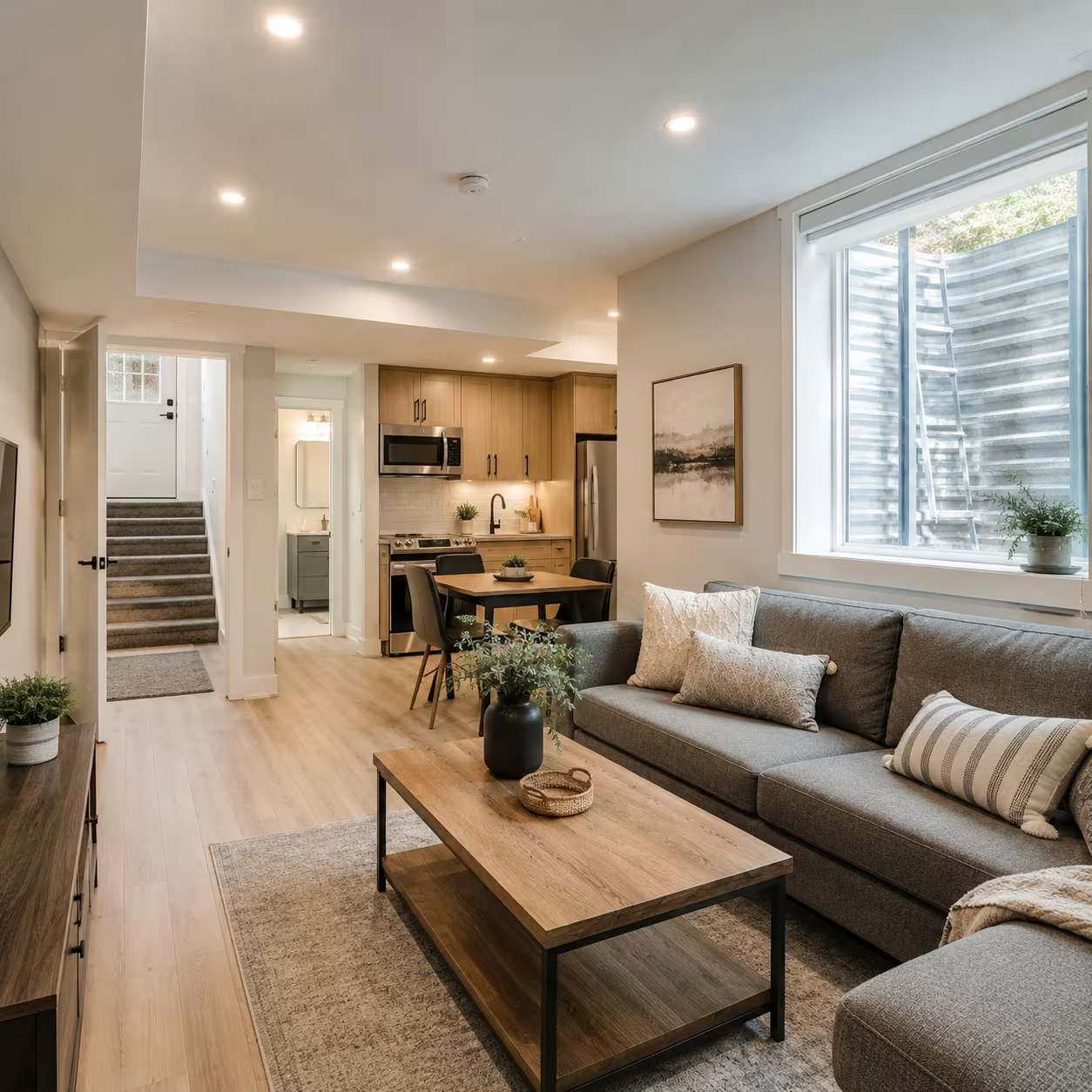
Basement Renovations
Radon is an invisible radioactive gas, and testing is the only way to know a home’s level. Health Canada’s guideline is 200 Bq/m³ and its residential guidance recommends a long-term test lasting at least three months. A short reading should not be treated as the basis for a major renovation or mitigation decision.
Homeowners may complete a do-it-yourself long-term test by following Health Canada’s instructions and using a suitable test kit or electronic monitor that has passed C-NRPP performance testing. If a measurement provider is hired, Health Canada recommends choosing a C-NRPP-certified professional. Our role is limited to radon-aware renovation planning, access and readiness scope, and coordination; we do not represent Calgary Home Remodeling & Renovation as a radon measurement provider or C-NRPP-certified mitigator.
Obtain a meaningful long-term measurement
Health Canada offers two testing paths: use a do-it-yourself long-term detector or electronic monitor that has passed C-NRPP performance testing, or hire a C-NRPP-certified measurement professional. The test should run for at least three months on the lowest lived-in level according to Health Canada’s placement guidance. Results should be interpreted from the long-term average rather than isolated peaks.
Bring radon into renovation planning early
A basement renovation changes access to floors, walls, service spaces, penetrations, and mechanical areas. Sharing valid test information before design allows the homeowner, renovation team, and certified radon professional to discuss sequencing and any appropriate readiness work. The renovation contractor does not independently prescribe a mitigation system or interpret a reading as a health diagnosis.
Coordinate certified mitigation work
When the long-term average is at or above 200 Bq/m³, Health Canada recommends corrective action and directs homeowners to certified radon mitigation professionals. The certified professional determines the suitable system and verification steps. Our construction scope can coordinate access, restoration, and scheduling around that separately defined work without claiming the specialist’s responsibility.
Protect access and plan for verification
Selections for flooring, walls, storage, and utility-room finishes should preserve agreed access to any radon components and labels. Closeout records should identify who completed regulated or specialist work and what follow-up the homeowner received. Post-mitigation verification and future testing intervals must follow the certified professional’s and Health Canada’s guidance, not an informal visual check.